RoofCut Series
for tapered insulation and roofing elements made of EPS, Neopor and XPS
CNC production solution for the flexible manufacturing of tapered boards, valley and hip boards, roof crickets and insulation wedges.
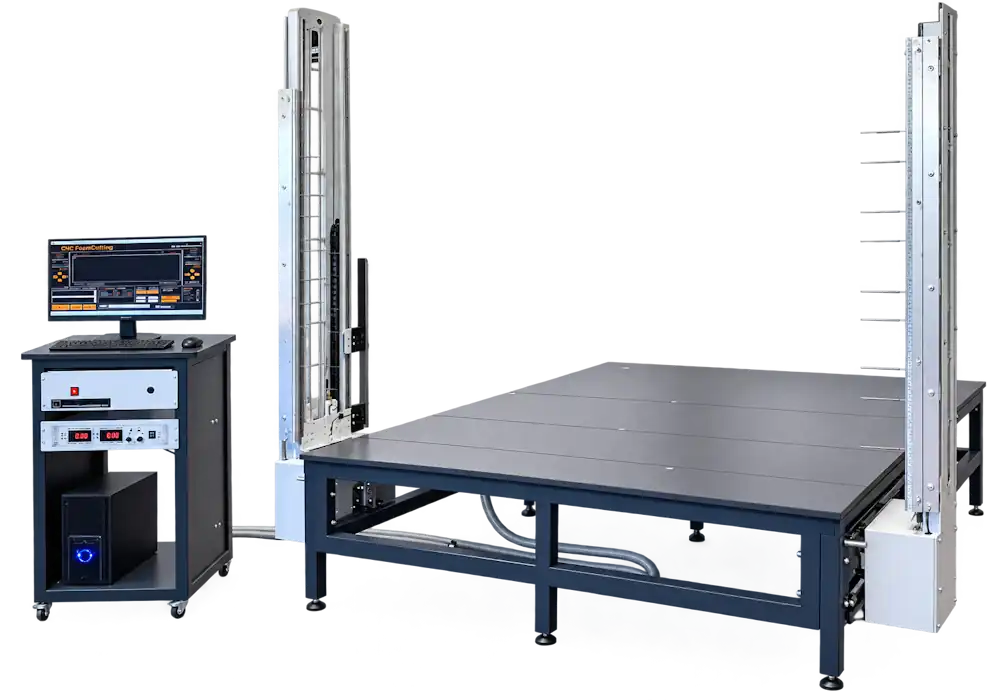
10 wires for boards
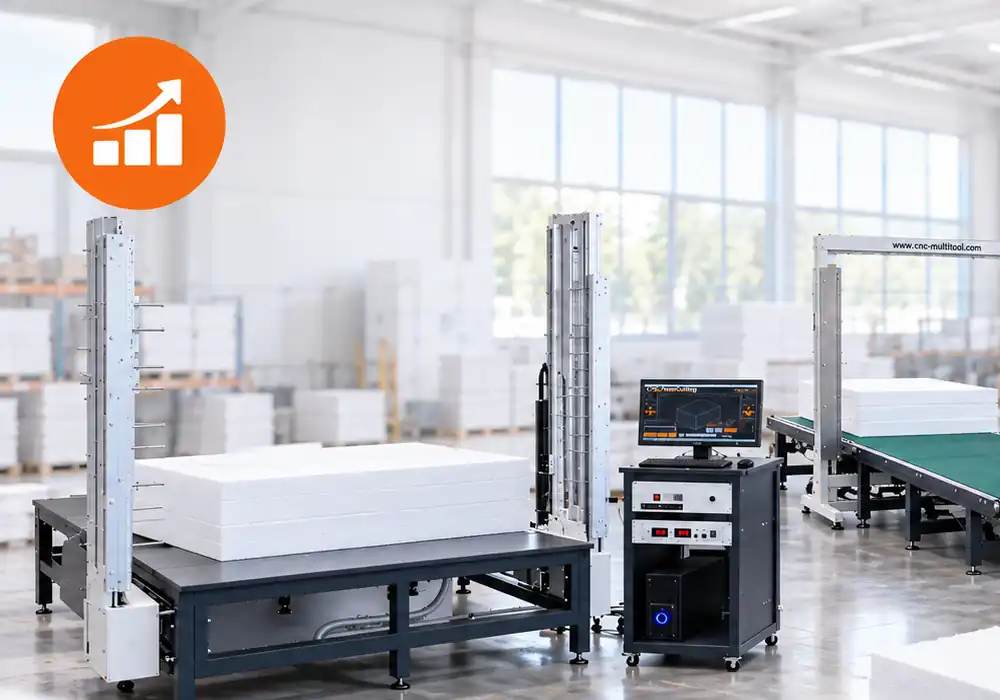
Produce tapered insulation in-house
The RoofCut Series was developed for roofing companies, insulation fabricators and manufacturers who want to produce tapered insulation and roofing elements made of EPS, Neopor and XPS flexibly in their own production.
Tapered boards, valley and hip boards, roof crickets, insulation wedges and individual contours can be produced directly from block or board material.
The special feature of the RoofCut Series is the combination of CNC hot wire contour cutting with a single cutting wire and a multi-wire system with up to 10 cutting wires for tapered board production.
This allows one machine to perform two production tasks: the economical production of several tapered boards at once and the flexible CNC manufacturing of individual roofing elements.
For roof applications made of stone wool, PIR, PU and PUR, we recommend our FW5000HR Series.
What can I produce?
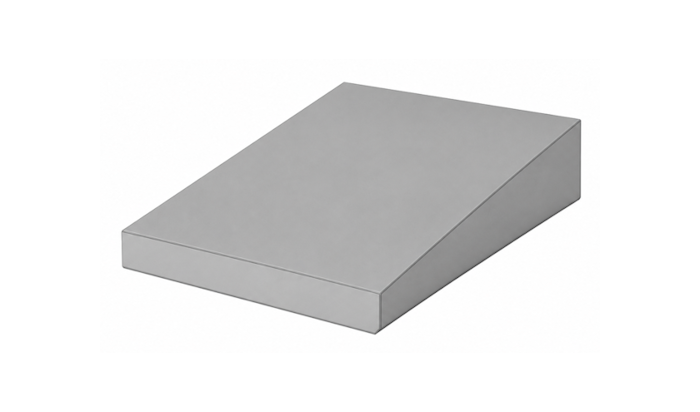
Tapered boards
Tapered boards made of EPS, Neopor and XPS for the controlled drainage of flat roofs.
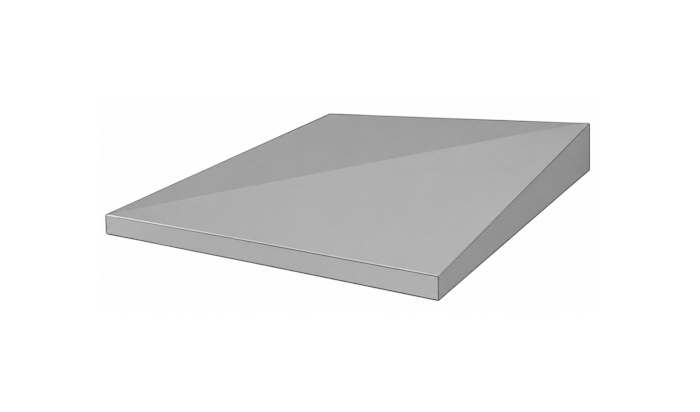
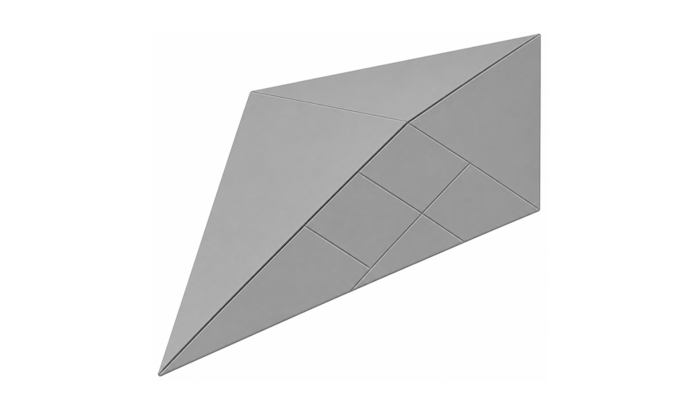
Valley and hip boards
Roofing elements made of EPS, Neopor and XPS for internal and external transitions between roof surfaces.
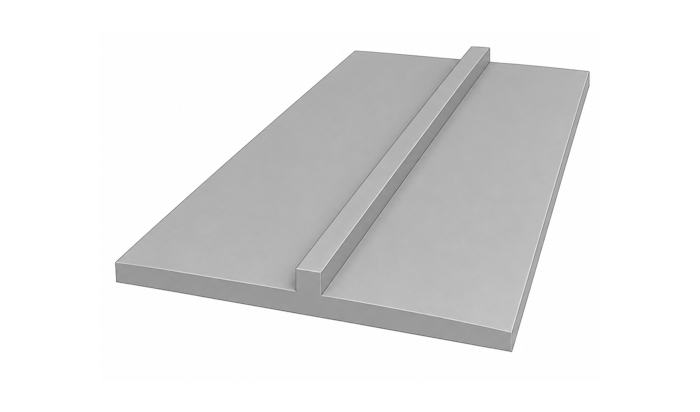
Roof crickets
Roofing elements made of EPS, Neopor and XPS for controlled water guidance and drainage.
What materials can I use?
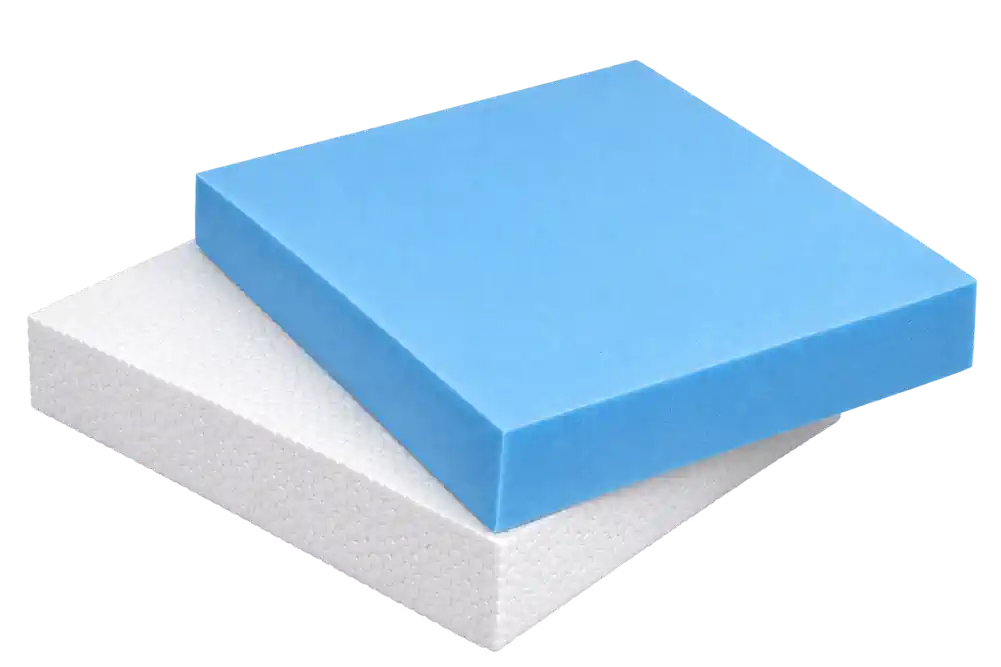
The RoofCut Series processes EPS, Neopor and XPS. For the production of typical roofing elements, 1 × 1 m starting formats are then used.
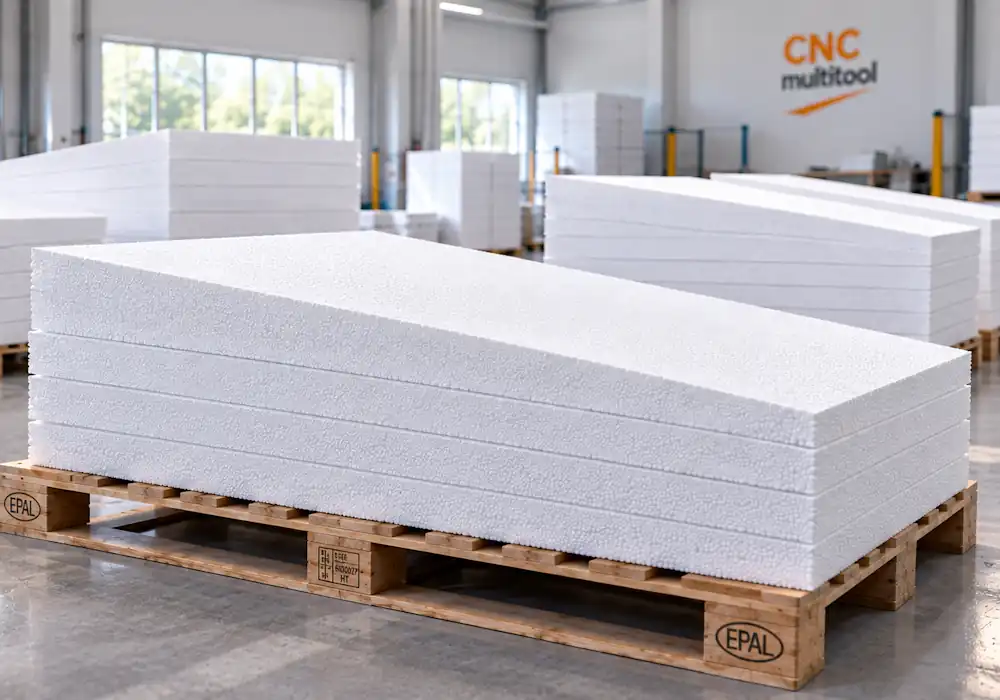
EPS and Neopor
EPS and Neopor are mainly processed as block material. Typical standard blocks are approximately 2,000 or 2,500 mm long.
For roof production, the blocks are first cut to 1 × 1 m starting formats — either directly on the RoofCut or separately with a GT1300S cut-to-length machine.
The prepared starting formats are then processed into tapered boards, valley and hip boards, roof crickets, insulation wedges or individual contours.
For producing tapered boards, up to 10 cutting wires can be used simultaneously.
XPS
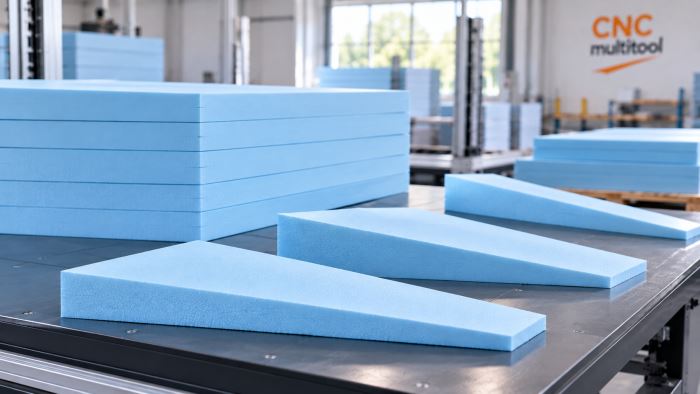
XPS is processed as board material. For roof production, 1 × 1 m boards are normally used and can already be ordered in this format.
The boards are processed directly on the RoofCut into tapered boards or individual cuts.
For XPS, a single cutting wire is normally used. The board is placed on the machine table and cut according to the desired geometry.
For roof applications made of stone wool, PIR, PU and PUR, we recommend our FW5000HR Series.
How can I produce?
Depending on the material and the desired roofing element, the RoofCut Series works with different production principles. Tapered boards can be produced with several cutting wires at once; more complex roofing elements are cut CNC-controlled with a single cutting wire.
Tapered boards with up to 10 cutting wires
For producing tapered boards from EPS and Neopor, the RoofCut Series works with a multi-wire system with up to 10 cutting wires.
The cutting wires are hung in according to the desired board thicknesses and slope positions. The cut is made in a pendulum cut, so that several tapered boards are cut from a single block at the same time.
Especially for recurring board sizes, this enables economical series production and high output.

CNC contour cutting with a single cutting wire
Valley and hip boards, roof crickets, insulation wedges and individual contours are produced CNC-controlled with a single cutting wire.
The four CNC axes can be moved independently of each other. This allows the cutting wire to take different positions and heights on the left and right sides.
This makes it possible to produce even more complex roofing elements precisely and reproducibly.

Cut EPS and Neopor blocks to length
Larger EPS or Neopor blocks can be cut to the required starting format directly on the RoofCut.
The block is placed on the machine table and brought to the required dimension with a straight hot wire cut.
For example, longer standard blocks can be prepared directly to the 1 × 1 m starting formats required for roof production.
Alternatively, cutting to length can be carried out separately with a GT1300S cut-to-length machine.

Process XPS boards with a pendulum cut
XPS is processed as board material on the RoofCut Series.
The board is placed on the machine table and the cutting wire is positioned according to the desired slope. The wire then passes through the board.
After the cut, the next board is placed and the cutting wire returns in the opposite direction. This creates a simple and efficient pendulum cut.
In this way, XPS boards can be processed into tapered boards one after another without unnecessary idle travel.

Which machine should I choose?
The main difference between the RoofCut20S and RoofCut25S is the available X travel. The deciding factor is the length of the purchased starting material to be processed on the machine.
| RoofCut20S | RoofCut25S | |
|---|---|---|
| X travel | 2,050 mm | 2,550 mm |
| Y travel | 1,300 mm | 1,300 mm |
| Cutting width | 1,450 mm | 1,450 mm |
| CNC axes | 4 | 4 |
| Cutting wires | up to 10 | up to 10 |
| Machine dimensions L × W | 3,100 × 2,100 mm | 3,600 × 2,100 mm |
| Machine height | 2,100 mm | 2,100 mm |
How fast can I cut?
The actual cutting speed depends on the material and material density. In addition, the specific cutting task affects the required cutting time.
Cutting speed
For EPS and Neopor, typical cutting speeds are around 400–650 mm/min. XPS is cut more slowly and is typically around 350–400 mm/min.
The actually usable speed is determined by material and material density.
Higher cutting speeds are possible, but require a higher wire temperature. The wire temperature cannot be increased indefinitely, however. If the temperature is too high, the cutting wire can break.
The maximum cutting speed is therefore determined not by the machine, but by the temperature resistance of the cutting wire.
What matters is therefore a stable cutting speed with a clean cut result.
Typical cutting times
10 tapered boards 1 × 1 m: approx. 2–3 minutes. Thanks to the multi-wire system, up to 10 tapered boards can be cut from a single block at once.
20 valley or hip boards: approx. 40–50 minutes. Valley and hip boards are cut with a single cutting wire.
1 roof cricket: approx. 45 minutes. A roof cricket consists of approximately 20 individual segments and therefore requires a correspondingly longer cutting time.
These figures are practical values and may vary depending on material, dimensions and cutting task.
Which cutting wire is used?
The RoofCut Series works with our TiTA64 cutting wire for EPS, Neopor and XPS. This is a specially developed, very tear-resistant wire for a stable and precise hot wire cutting process.
Depending on the application, cutting wires with a diameter of 0.35 or 0.40 mm are used.
When heated, the cutting wire expands and becomes longer. The tension springs absorb this change in length and keep the wire under tension during cutting. This prevents the cutting wire from sagging.
For precise, high-quality cut results, the quality of the cutting wire is decisive.
The cutting wire and tension springs are wear parts and can be replaced easily when required.

How easy is it to operate?
To operate the RoofCut, you do not need to write CNC programs. What matters is which roofing element you want to produce.
Tapered boards and cutting blocks to length run directly via the supplied Roof Standard Machine Plugin of the machine software. There you enter the dimensions and parameters directly and cut the tapered boards in a pendulum cut — from an EPS block with up to 10 wires or from XPS boards with a single angled wire.
All other roofing elements — for example valley and hip boards, roof crickets or individual contours — are created with the styroCAM Roof software. Even more complex elements such as roof crickets are created via parameters and are no more difficult to operate.
Many of our customers familiarise themselves with the individual applications independently using our instructions or use application training with one of our application engineers — at our premises or optionally at your site.
Which software is used?
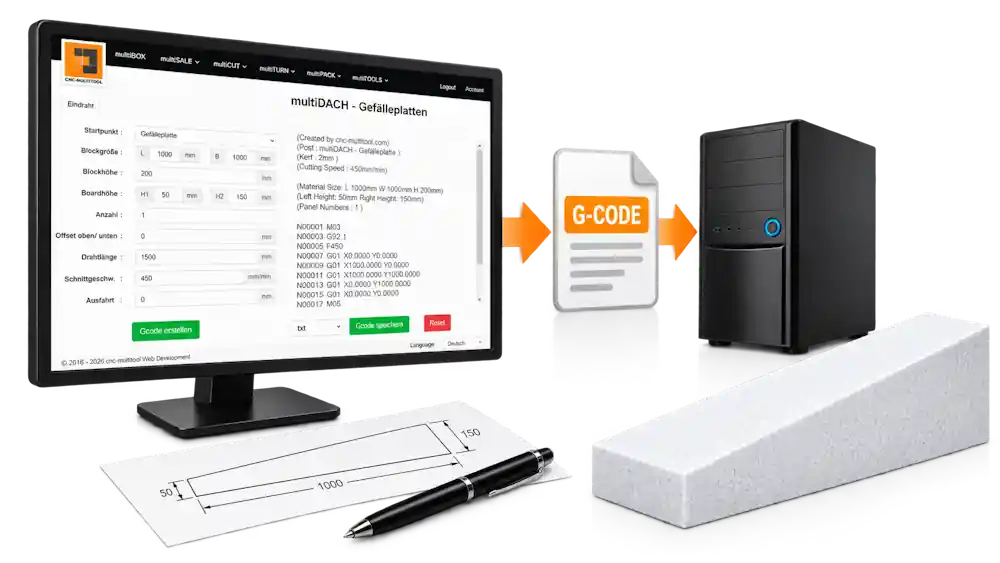
Two coordinated software components are used to produce the roofing elements.
Roof Machine Plugin
The included Roof Standard Machine Plugin is designed for producing tapered boards and cutting blocks to length. For the tapered boards, the wires are hung in manually and cut in a pendulum cut. When cutting blocks to length with a single wire, the software calculates the required wire position and cutting sequence automatically.
No CNC programming or manual geometric calculation is required for these applications.
CAM software styroCAM Roof
For the tapered boards, the styroCAM Roof Tapered Boards module calculates how the wires are to be hung in manually and optimises material usage to keep waste low.
Valley and hip boards, roof crickets and individual contours are also created with styroCAM Roof. The typical roofing elements are generated via parameters — you do not have to calculate or program the geometry yourself.
For individual contours that cannot be created using the predefined roof functions, an existing DXF or DWG drawing is imported into styroCAM Roof. The software prepares the contour for the cutting process and generates the machine program from it.
We supply the RoofCut Series with styroCAM Roof; use is included in the first year.
For free contours, the machine is not bound to styroCAM Roof — another suitable CAM software can also be used to create the machine programs.
What tasks does it perform in my production?
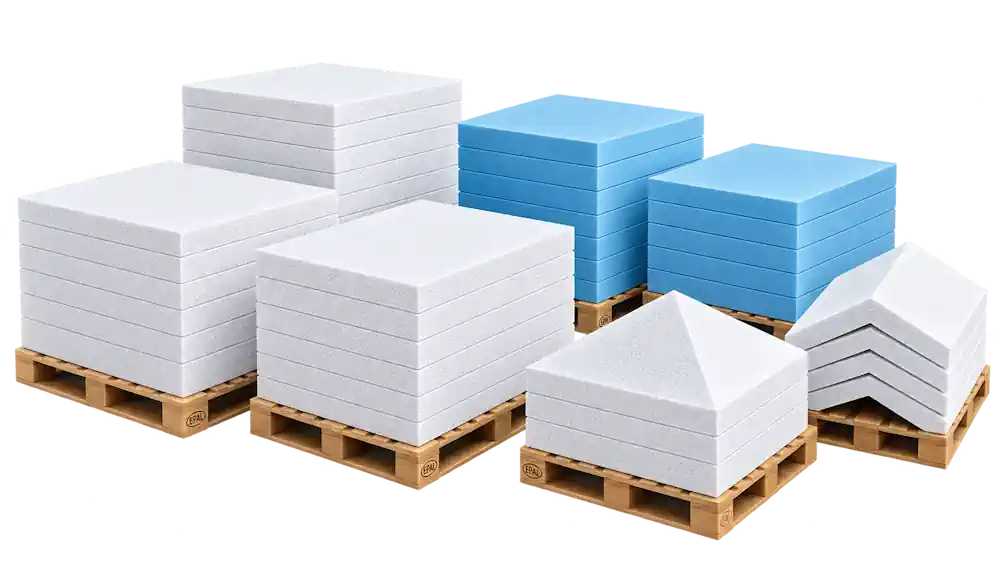
The RoofCut can be used both for pre-production for stock and for short-notice project-specific manufacturing.
Produce roofing elements for stock
The RoofCut Series is suitable for the stock production of regularly required roofing elements.
Tapered boards, valley and hip boards and roof crickets can be pre-produced and stored during quieter periods.
This lets you build up your own stock and respond to new projects quickly and independently of external delivery times.
React to projects and changes at short notice
Tapered boards, valley and hip boards and roof crickets can be produced on a project basis and at short notice.
This allows you to react quickly to different projects, changed dimensions, custom parts or missing roofing elements.
Especially for smaller quantities and short-notice re-orders, the RoofCut remains flexible to use without having to reconfigure ongoing production.
What happens in the event of service?
In the event of service, support is provided directly by cnc-multitool.
Many faults can first be analysed together via phone, email or remote support and often resolved directly.
The RoofCut Series is designed so that important components are easily accessible and can be replaced quickly if required. Many tasks can also be carried out by your own employees after consultation with our service team.
If an on-site repair is required, a service technician can carry out the necessary work directly at your premises.
The goal is always to keep downtime as short as possible and get the machine back into production quickly.

Machine features
The RoofCut Series is built as a robust CNC hot wire cutting machine for daily use in the production of roofing elements made of EPS, Neopor and XPS.
Stable, open machine table
The machine table consists of a stable steel construction and is designed for daily use in production.
Thanks to the open design, the table is freely accessible from all sides. EPS and Neopor blocks as well as XPS boards can therefore be easily placed, moved, aligned and removed again after cutting.
Especially when switching between different material formats and cutting tasks, the open design simplifies material handling and keeps the working area clear.

Steel-reinforced belt drive
The axes of the RoofCut Series are driven by steel-reinforced toothed belts. This drive concept is particularly well suited to the light cutting arms and enables fast direction changes, smooth movements and precise positioning.
Especially when processing EPS and Neopor, the belt drive offers a further advantage: loose material particles can lodge between the teeth of open racks and impair operation. The belt drive is significantly less sensitive to such contamination and is easy to clean.
The steel reinforcement provides the necessary tensile strength and stability. No additional lubrication of the drive is required.
The belt drive thus combines precise axis movements with low maintenance in daily production.

4 independently controllable CNC axes
The RoofCut Series has 4 independently controllable CNC axes. This allows the two sides of the cutting wire to be positioned independently of each other.
The cutting wire can be moved to different heights on the left and right sides of the machine. In addition to straight cuts, defined slopes and different height profiles are therefore possible.
This independent axis control forms the technical basis for producing tapered boards, valley and hip boards, roof crickets and individual roofing elements.
For normal straight cuts, the axes can move together. If different heights or contours are required, the axes are positioned independently of each other accordingly.
The programmed movements are executed precisely and reproducibly by the industrial 4-axis CNC control.

Multi-wire system with up to 10 cutting wires
For producing tapered boards, the RoofCut Series can work with up to 10 cutting wires at once.
The cutting wires are set up according to the desired board thicknesses and slope positions. This allows several tapered boards to be cut from a single EPS or Neopor block in one operation.
Especially for regularly required tapered boards and for stock production, this makes very efficient use of the available machine time.
For individual CNC contours, on the other hand, a single cutting wire is normally used. The RoofCut Series thus combines productive multi-wire cutting and flexible CNC contour cutting in one machine.

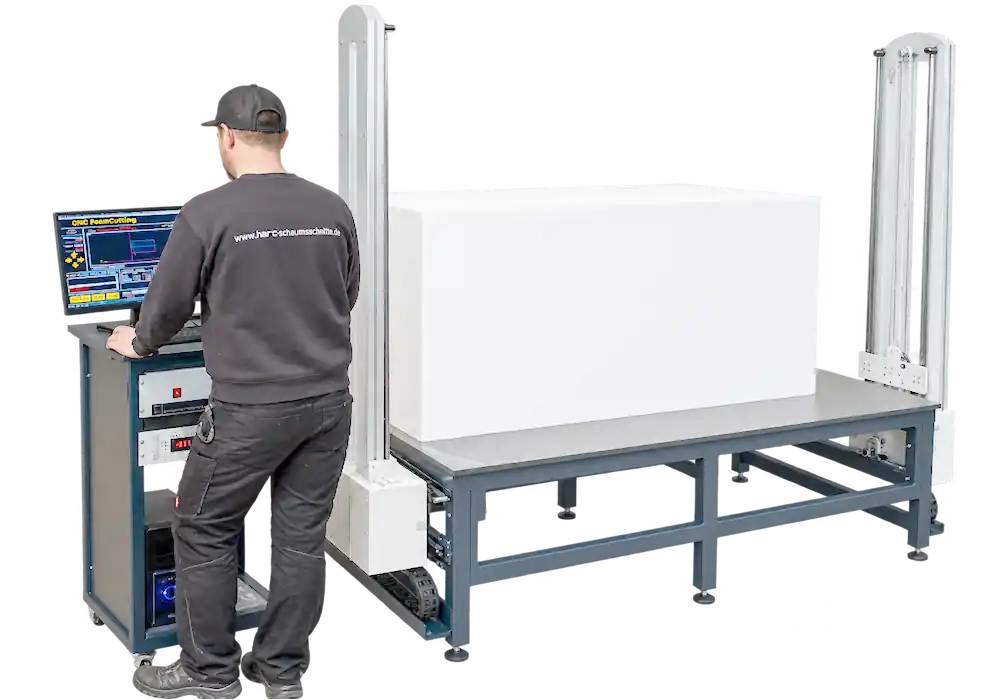
Operator console directly at the machine
The operator console is located directly at the RoofCut and creates a fixed and clearly arranged workstation at the machine.
Computer, monitor, keyboard, mouse and the controls required for machine operation can be clearly arranged at one workstation.
This means machine operation, software and production documents are located exactly where they are needed in daily production.
The operator can monitor the machine, set up material and start and monitor the cutting process directly from the workstation at the machine.
The operator console is part of the standard equipment of the RoofCut Series.

Technical data
The most important technical data of both machine variants in direct comparison.
| Feature | RoofCut20S | RoofCut25S |
|---|---|---|
| CNC axes | 4 | 4 |
| X travel | 2,050 mm | 2,550 mm |
| Y travel | 1,300 mm | 1,300 mm |
| Wire length / cutting width | 1,450 mm | 1,450 mm |
| Number of cutting wires | up to 10 | up to 10 |
| Max. wire inclination / height offset | 10% | 10% |
| Wire diameter | 0.35 / 0.40 mm | 0.35 / 0.40 mm |
| Drive | Belt | Belt |
| Max. travel speed | 6 m/min | 6 m/min |
| Typical cutting speed EPS | 400–650 mm/min | 400–650 mm/min |
| Typical cutting speed XPS | 350–400 mm/min | 350–400 mm/min |
| Power supply | 220 V, 50–60 Hz | 220 V, 50–60 Hz |
| Power consumption | 1,500 W | 1,500 W |
| Installation dimensions (L × W) | 3,100 × 2,100 mm | 3,600 × 2,100 mm |
| Machine height | 2,100 mm | 2,100 mm |
| Approx. machine weight | 300 kg | 350 kg |
| Technical datasheet | ||
| Price plus VAT | ||
| Request | Request |
Scope of supply
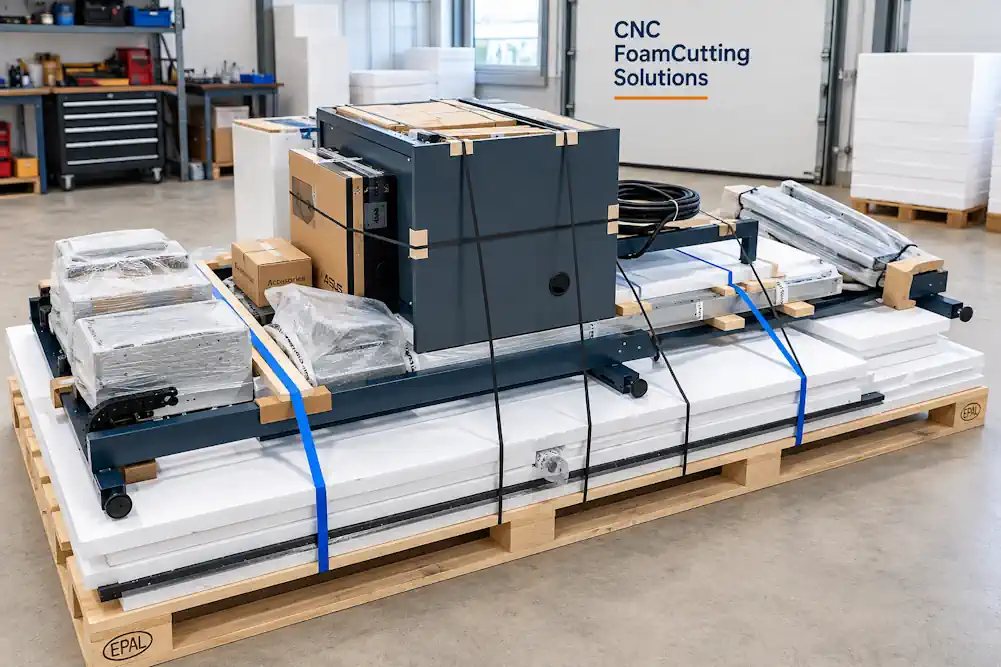
The RoofCut Series is supplied as a prepared machine solution. Machine, control and the basic equipment for roof production are already included.
Included:
- RoofCut CNC cutting machine
- Machine control
- Wire power supply
- USB controller
- Machine software
- Operator console
- Operating manual
- 1-year warranty
Options and accessories
The RoofCut Series can be extended according to material format, cutting task and production workflow.
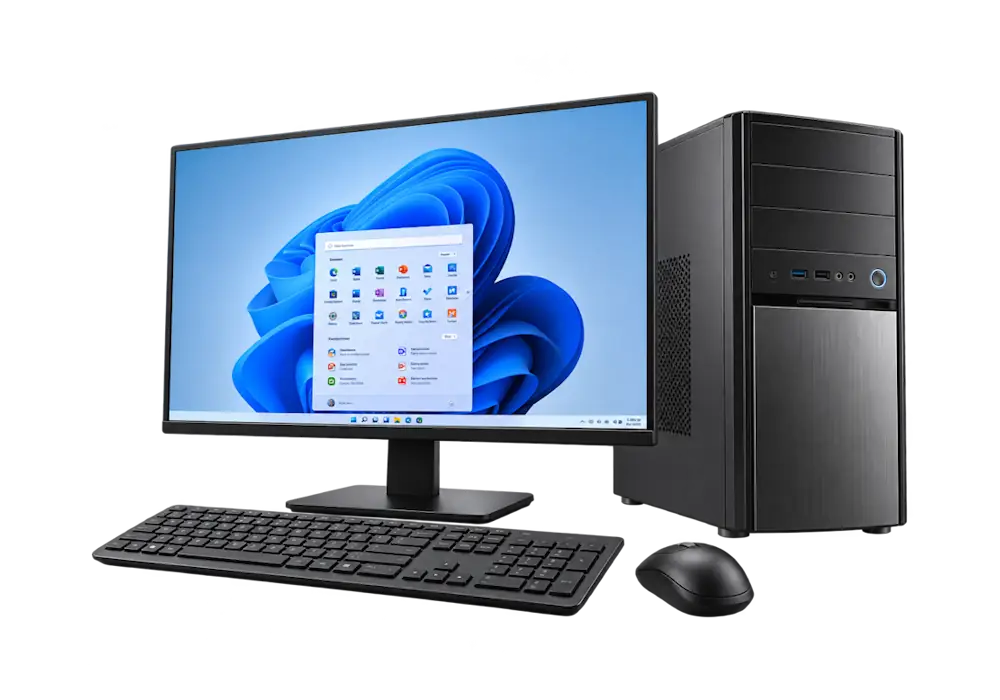
Control PC package
Together with the machine software, control and styroCAM Roof, the computer system forms the operating environment of the RoofCut Series.
The system is prepared for machine operation and is supplied with a current Windows Pro licence, so that the computer, interfaces and software are coordinated with one another.
All cnc-multitool computer systems are equipped with a second SSD as a backup drive.
TiTA64 cutting wire and tension springs
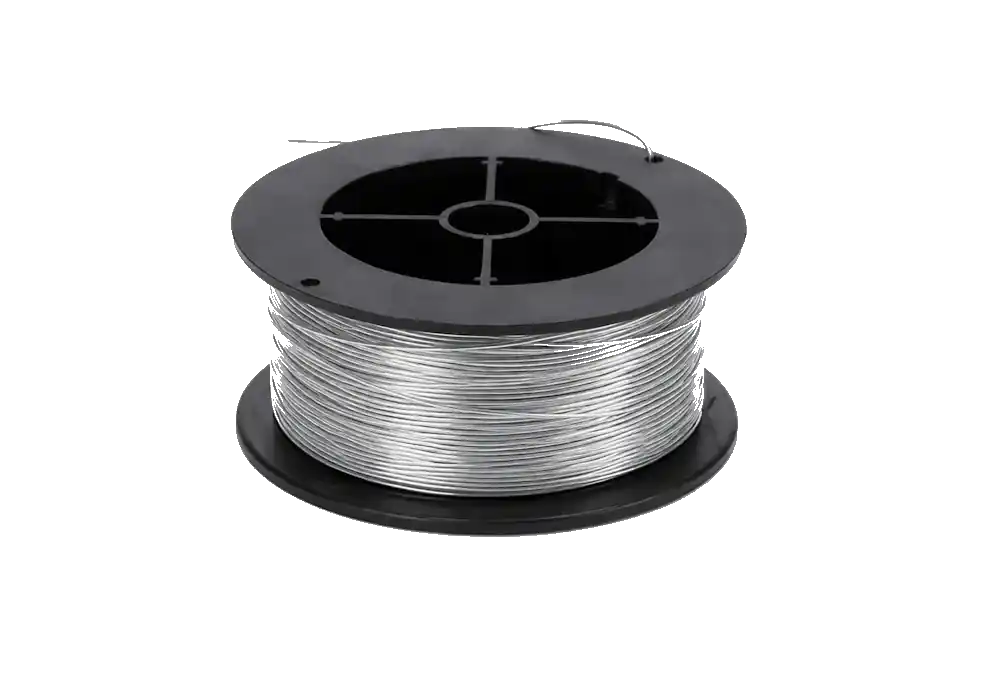
The cutting wire and tension springs are among the consumables and spare parts of the RoofCut Series.
For reliable production, we recommend keeping enough TiTA64 cutting wire and matching tension springs available as spares.
This means a worn or damaged cutting wire can be replaced at short notice and the machine is quickly ready for use again.
Installation and commissioning
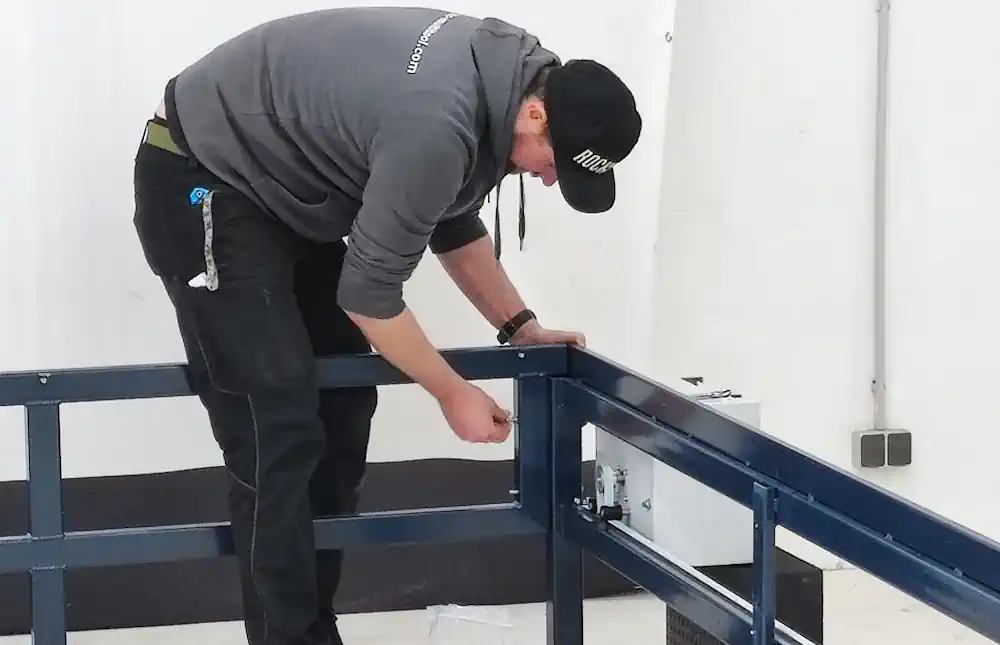
There are two options for commissioning the RoofCut Series.
On request, our technicians carry out the installation and commissioning directly at the customer's site. The machine is set up, connected, tested and handed over ready for operation.
Alternatively, the RoofCut Series can also be commissioned by the customer. We provide the appropriate documentation and videos for this and additionally support via remote service if required.
In addition, software and application training can be booked at cnc-multitool, at the customer's site or online via TeamViewer.
Frequently asked questions
Which materials can the RoofCut Series cut?
The RoofCut Series is designed for hot wire cutting of EPS, Neopor and XPS.
Can the RoofCut cut several tapered boards at once?
Yes. With the multi-wire system, up to 10 cutting wires can be used at once, producing up to 10 tapered boards in a single operation.
Which RoofCut size do I need?
The deciding factor is the length of the purchased starting material you want to process on the machine. The choice of the right RoofCut size depends on this.
Which software is used?
Tapered boards and cutting blocks to length run via the supplied Roof Standard Machine Plugin. Valley and hip boards, roof crickets and individual contours are created with our cloud-based CAM software styroCAM Roof. Dimensions and parameters are entered in each case, and the machine program is generated from them automatically.
Do I need CAD or CNC knowledge?
For typical roofing elements, no CNC programming knowledge is required. Dimensions and parameters are entered directly in the Roof Machine Plugin (tapered boards, cutting to length) or in styroCAM Roof (valley and hip boards, roof crickets).
You only need CAD knowledge if you want to create your own free contours. Existing DXF or DWG drawings can be imported directly.
Can I cut individual contours?
Yes. A CAM software is required for individual free contours. We recommend styroCAM Roof for this.
Existing DXF or DWG drawings can be imported, prepared for the cutting process and output as a machine program.
Which cutting wire is used?
The RoofCut Series works best with our TiTA64 cutting wire for EPS, Neopor and XPS. This is a specially developed, very tear-resistant wire. Depending on the application, 0.35 or 0.40 mm diameter is used.
Why are hard tension springs used?
When heated, the cutting wire expands and becomes longer. The hard tension springs absorb this change in length and keep the wire under tension during cutting. This prevents the cutting wire from sagging.
How fast can the RoofCut Series cut?
For EPS and Neopor, typical cutting speeds are around 400–650 mm/min, for XPS around 350–400 mm/min.
Higher cutting speeds require a higher wire temperature. The maximum cutting speed is therefore determined not by the machine, but by the temperature resistance of the cutting wire.
How are XPS boards processed?
XPS is usually processed as board material. Tapered boards can be produced with a pendulum cut. Each cut produces two tapered boards.
Can I cut EPS and Neopor blocks to length on the RoofCut?
Yes. Larger EPS and Neopor blocks can be cut to length directly on the RoofCut to the required starting format of e.g. 1 × 1 m.
Who provides the service?
Technical support is provided directly by cnc-multitool. Many questions and faults can be resolved by phone, email or remote support.
Can I commission the RoofCut myself?
Yes. The machine can generally be set up and commissioned by the customer using our documentation. On request, we additionally support you with installation and commissioning.
Is training available?
Yes. We offer individual training for the machine and applications at our premises or optionally at your site.
Experience the RoofCut Series live
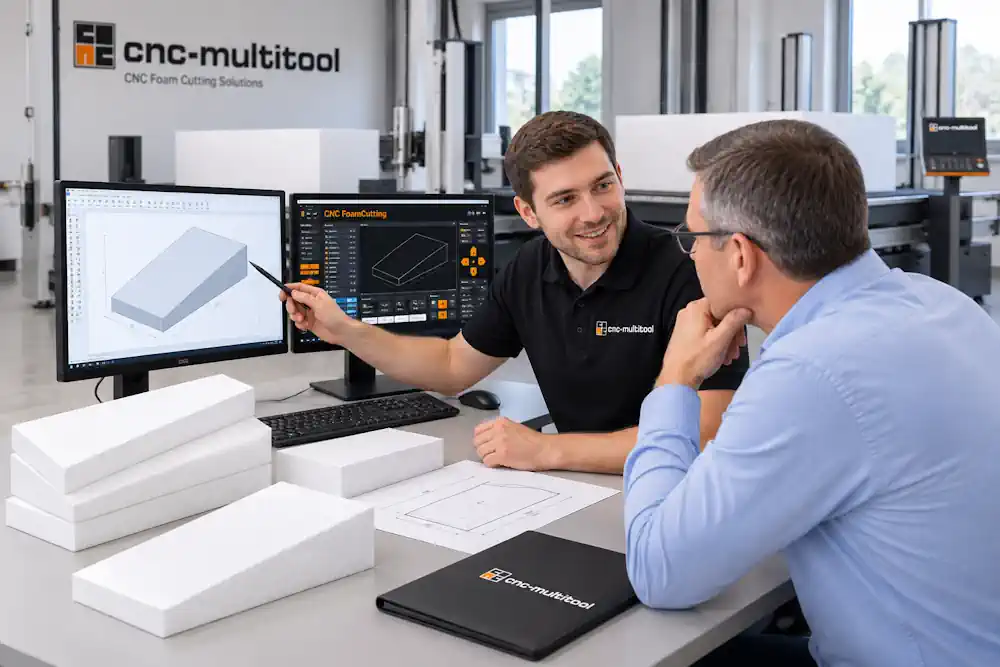
Visit us for a demonstration of the RoofCut Series in Ilmenau. We are happy to show you the machine in practical use and discuss your application directly at the machine.
On request, we also test your own material and show you the production of tapered boards, valley and hip boards, roof crickets and individual contours from EPS, Neopor or XPS.
Together we clarify which machine size and which equipment make sense for your production.
Contact
Consulting
personal and
professiona
Testing
Experience our
machines live
Planning
Customized solutions
for your production.

Support
there for you even
after your purchase